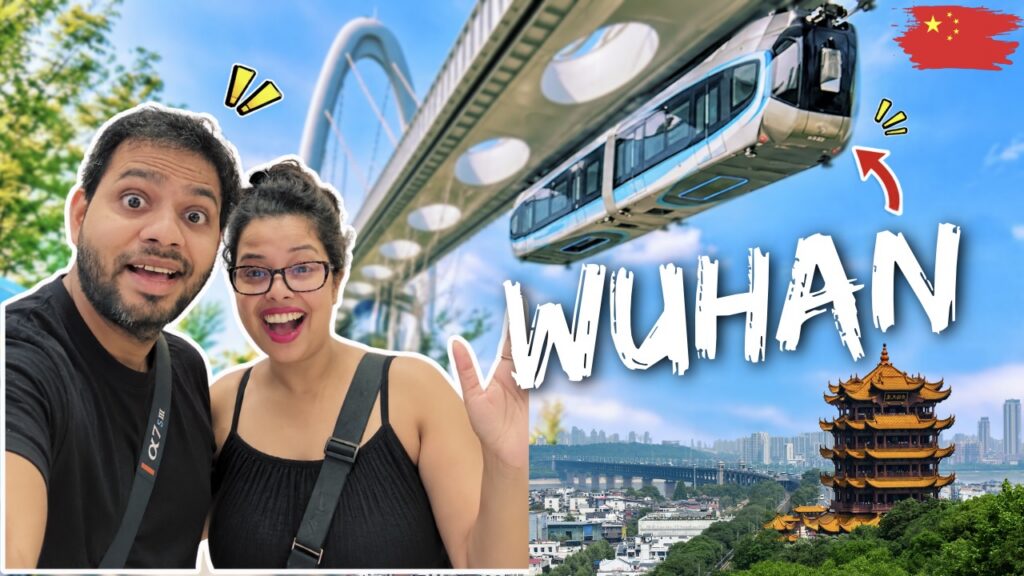
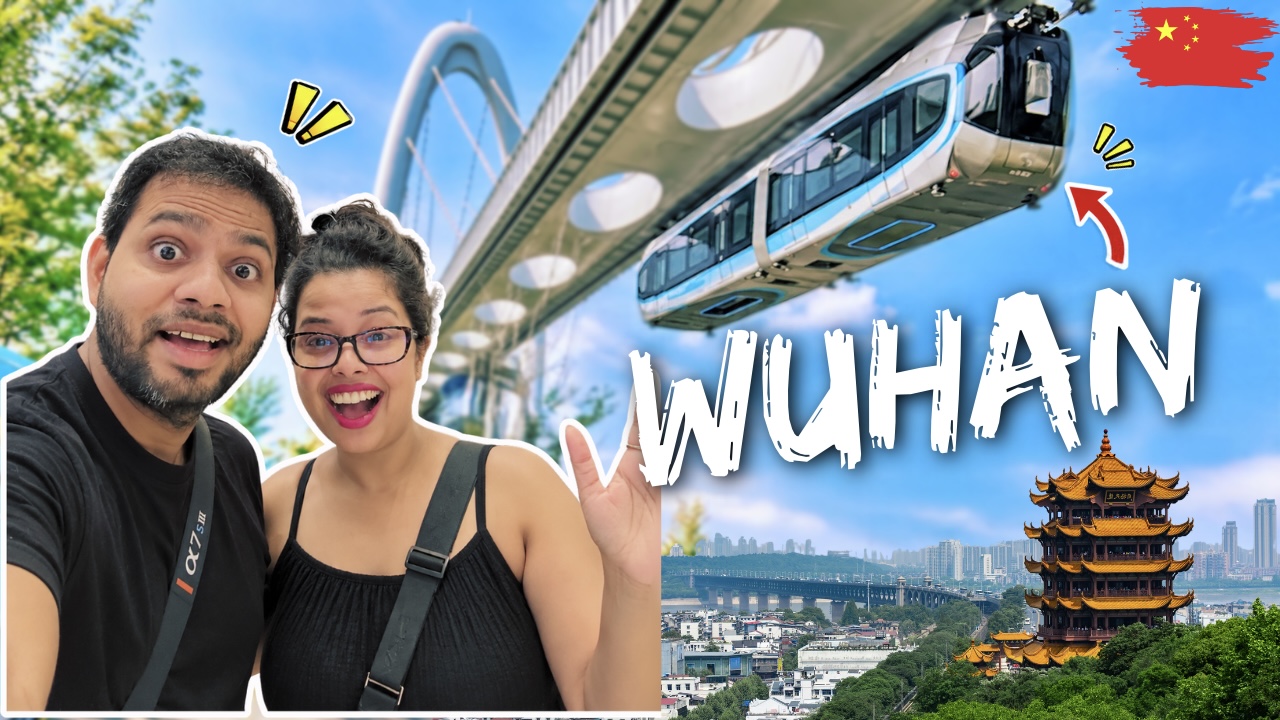
Wuhan Travel Guide | Futuristic Sky Train, Yellow Crane Tower & Life Beyond the Headlines
Wuhan is a city many people around the world recognise for one reason: COVID-19. But when we arrived, we discovered a very different side of this Chinese megacity—futuristic transport, huge shopping malls, lively streets, traditional landmarks and the mighty Yangtze River.
We travelled from the Wugong Mountains to Wuhan by DiDi and high-speed train, changing trains in Changsha. During our stay, we experienced a Chinese spa, explored a luxury shopping plaza, saw Wuhan's suspended Sky Train, stayed at two Marriott properties, tried traditional ear cleaning, walked beside the Yangtze River and visited the famous Yellow Crane Tower.
We arrived with very little knowledge of Wuhan beyond its association with the pandemic. We left impressed by its scale, technology, greenery and energy. Here is what we experienced—and what you can explore if you are planning a trip to Wuhan.
🚄 Travelling from Wugong Mountains to Wuhan
After exploring the misty Wugong Mountains, it was time to head back towards city life. We checked out and booked a DiDi to Pingxiang North Railway Station. Even though we were staying in a mountain area, a driver accepted our booking within a couple of minutes. That convenience became one of our favourite things about getting around China.
From Pingxiang North, we took a high-speed train towards Wuhan, with a quick change in Changsha. The first leg took around 30 minutes, followed by a journey of approximately 1 hour and 30 minutes from Changsha to Wuhan. Our second-class train journey from Pingxiang North to Wuhan cost approximately US$78 for two people.
We picked up McDonald's to eat on the train. The second-class carriage had a comfortable seating arrangement, and the journey gave us another chance to appreciate China's high-speed rail network. At one point, our train was travelling at around 334 km/h, and we saw it reach approximately 348–349 km/h.
What surprised us most was how stable the train felt at that speed. We could keep our drinks on the table without them shaking around. Having experienced Japan's Shinkansen, we were particularly impressed by the smooth ride. The engineering, speed and comfort made this one of the most memorable train journeys of our travels.
When we arrived in Wuhan, the station felt enormous and remarkably clean. We even had an unexpected encounter: someone recognised us from Follow The Imprints and our travels. Of all the places in the world to meet a viewer, Wuhan was certainly not the one we expected!
🏨 Our First Stay in Wuhan: Renaissance Hotel
For our first night, we checked into a Renaissance Hotels property by Marriott. The room had a king-size bed, a work desk, a couch, a pantry area, a minibar, robes and slippers, and a spacious bathroom with a separate shower and bathtub. There was also a view of the Wuhan skyline.
The room rate was approximately US$74 per night without breakfast. However, the room was quite dusty, particularly around the carpet. After raising the issue with the hotel, we were moved to a better corner room with a much nicer city view.
It was our first glimpse of Wuhan beyond the image we had carried in our minds. From the hotel window, we could see a huge modern city filled with high-rise buildings. Wuhan was already challenging our assumptions.
💆 Our First Chinese Spa Experience in Wuhan
After freshening up, we headed out to experience a Chinese spa. We booked a 90-minute massage for around US$32 per person, which included food and drinks. The DiDi ride itself was another fun experience: the Bestune car had phone-charging cables, and the passenger seat even had a massage function.
The spa experience was very different from massages we have had in other parts of the world. The service included snacks, fruit, tea and drinks, along with a comfortable environment and impressive massage chairs. The massage was firm, but we enjoyed it so much that 90 minutes seemed to pass in no time.
Our friend Mike, who was travelling with us, also enjoyed the experience. We all agreed that the combination of service, facilities and price made it a memorable part of our Wuhan visit.
🛍️ Luxury Shopping & Street Food in Wuhan
After the spa, we found ourselves in a large luxury shopping plaza. The area had impressive standalone stores for brands such as Louis Vuitton, Gucci and Prada, as well as a two-storey Lululemon store. It was a very different shopping experience from what we were used to seeing in Canada.
We also visited a Jo Malone store to pick up a favourite perfume. During our visit, we were able to take advantage of a tourist VAT refund, which made the purchase cheaper than buying the same product in Canada. If you plan to shop in China, check the current eligibility rules, participating stores and refund process before making a purchase.
By then, we were hungry and went looking for dinner. After an underwhelming experience at a Japanese-style restaurant, we turned to street food nearby for something more satisfying. Skewers and casual local food helped make up for the disappointing meal—and gave us another taste of everyday city life.
🌆 Wuhan: A City Beyond the COVID-19 Headlines
Wuhan is a major transport and cultural hub in central China, with a population of more than 13 million mentioned during our visit. But for many people around the world, the city's name is closely associated with the COVID-19 pandemic, which emerged in late 2019.
We wanted to see what the city was like beyond those headlines. What we found was a vibrant, modern urban centre with huge shopping malls, neon lights, high-rise buildings, technology and plenty of green spaces. Wuhan is also developing as a major technology city.
We had arrived with very little knowledge of its history or everyday life. Exploring it in person helped us see that Wuhan is much more than the single event with which it is often associated.
🚝 Riding Wuhan's Futuristic Suspended Sky Train
One of the experiences we were most excited about was seeing Wuhan's suspended monorail, often called the Sky Train. We had watched videos of it before arriving, but seeing it operating in person was something else.
We first explored an area known as Italy and Spain Street. One building looked like a traditional church, but it was actually a Huawei store designed with church-inspired architecture. We also spotted a robotic dog inside a China Mobile store—another unexpected glimpse of the technology on display around the city.
The Sky Train was the real highlight. It is a suspended monorail with a glass floor and panoramic viewing windows. From inside, passengers can enjoy views in multiple directions, including down through the glass floor. The system offers approximately 270-degree views and was described in our visit as China's first commercial driverless suspended Sky Train, which opened in September 2023.
Finding the right place to see it took some effort. We used a combination of metro rides and a taxi before finally reaching the viewpoint. But when the train passed above us, it was worth the journey. It looked futuristic, and it was one of those moments when we stopped and thought: this is Wuhan, China.
Our tip: Plan the Sky Train stop in advance and check the exact viewing location on a current local map. We found that navigating to the right spot was not as straightforward as we expected.
🏨 Staying at Fairfield by Marriott in Hankou
For the next part of our stay, we checked into Fairfield by Marriott in the Hankou area of Wuhan. This hotel turned out to be a pleasant surprise and offered excellent value during our visit.
Our room had a king-size bed, a work and seating area, a TV, a pantry with coffee and tea, a mini fridge, plenty of storage, a full-length mirror and a rainfall shower. We were staying on the 23rd floor, the highest floor of the building, and had a wide, unobstructed view of the city.
The best part was the value. We paid approximately US$51 per night and received breakfast and complimentary access to the hotel's self-service laundry. The laundry room was on the 19th floor, with washing machines and dryers available for guests.
For travellers moving around China with luggage and spending several nights in each city, free laundry can make a real difference. Add breakfast, a comfortable room and those city views, and we were very happy with this stay.
👂 Trying Traditional Ear Cleaning in Wuhan
After checking in, we took another DiDi to a pedestrian street leading towards the Yangtze River. As soon as we entered the area, we spotted an ear-cleaning shop and decided to give it a try.
We had an ear-cleaning and washing treatment that cost 60 CNY per person. It was a surprisingly relaxing experience and felt almost like a massage for our ears. It was certainly not something we do every day while travelling!
The pedestrian street had plenty of shops, stalls and decorative storefronts. We enjoyed wandering around, looking at the displays and taking in the atmosphere before continuing towards the river.
🌉 Walking Along the Yangtze River
After quite a bit of walking, we finally reached the Yangtze River. It was wonderful to see such a vast river running through the city. The waterfront has a broad pedestrian promenade, making it a relaxing place to walk and enjoy the views.
The Yangtze is the longest river in Asia and the third-longest river in the world, after the Nile and Amazon. We had now seen all three of these great rivers during our travels, which made the moment even more special.
The riverfront felt open and peaceful compared with the busy streets and shopping areas. We also noticed that Wuhan has evening light displays, adding another layer to the city's nighttime atmosphere.
🤖 Robot Food Delivery at the Hotel
Back at the hotel, we got another small taste of China's technology when our food was delivered by a robot. Instead of a staff member bringing the order to our room, the delivery robot arrived and announced itself. We went out to collect our food—an everyday convenience that still felt novel to us.
🏯 Visiting the Famous Yellow Crane Tower
Our next major stop was the iconic Yellow Crane Tower, one of Wuhan's best-known landmarks. The tower is associated with a history stretching back more than 1,700 years, although it has been rebuilt several times over the centuries.
During our visit, the entrance ticket cost 70 CNY per person. Remember to bring your passport, as it may be needed for ticketing or entry checks. After walking through the grounds and climbing a few sets of steps, we reached the impressive traditional-style tower.
The architecture is striking, with traditional Chinese design, colourful details and a setting surrounded by greenery. Although the tower has been reconstructed, its design gives it a historic appearance that fits beautifully into the surrounding park.
We climbed several staircases to reach the upper levels. From the top, we enjoyed 360-degree panoramic views of Wuhan, including the Yangtze River and the city's modern skyline. Looking out from a traditional Chinese landmark and seeing skyscrapers stretching across the horizon was a fascinating contrast.
🍢 Exploring Hubu Alley Food Street
After visiting the Yellow Crane Tower, we headed to Hubu Alley, a well-known food street in Wuhan. The area was busy and had a very tourist-oriented setup, with plenty of stalls and places to try local snacks.
We were hungry and hopeful after a few mixed food experiences during our stay. We tried skewers, including an offer of three for 10 CNY, and explored what the street had available. The food experience was a little underwhelming for us overall, especially compared with the expectations we had built up.
Hubu Alley may still be worth a visit if you want to see one of Wuhan's famous food streets and sample snacks in a lively setting. Just keep your expectations flexible—our experience was not the culinary highlight of the trip.
✨ Is Wuhan Worth Visiting?
We came to Wuhan knowing very little about the city beyond its association with COVID-19. What we experienced was a modern, energetic and surprisingly green city, with impressive transport, futuristic technology, large shopping districts, historic architecture and a beautiful riverfront.
The suspended Sky Train was one of our favourite experiences, while the Yellow Crane Tower gave us a chance to appreciate Wuhan's history and see the city from above. We also enjoyed the Chinese spa, the riverside walk and the convenience of getting around by DiDi.
Not everything was perfect. Our first hotel room was dusty, and Hubu Alley did not quite live up to our food expectations. But those moments were only a small part of a trip that genuinely surprised us.
We'd recommend adding Wuhan to a China itinerary if you are interested in modern Chinese cities, transport, technology, local food streets and historic landmarks. It deserves to be explored for much more than the headlines.
🧭 Our Wuhan Travel Tips
- 🚄 We travelled from Pingxiang North to Wuhan with a change in Changsha; allow time for the transfer between trains.
- 🎫 Our train tickets cost approximately US$78 for two people in total.
- 🚅 Our train reached approximately 348–349 km/h and was remarkably stable during the journey.
- 🚕 DiDi was convenient for getting around, and our bookings were generally accepted quickly.
- 💆 A 90-minute spa and massage cost around US$32 per person during our visit, including food and drinks.
- 🛍️ If shopping as a tourist, ask participating stores about VAT refund eligibility and the required process before paying.
- 🚝 Research the exact Sky Train viewing or boarding location in advance; finding it took us a combination of metro rides and a taxi.
- 🏨 Our Fairfield by Marriott stay in Hankou cost around US$51 per night and included breakfast and complimentary laundry.
- 👂 Ear cleaning cost us 60 CNY per person.
- 🌉 Allow time for a walk along the Yangtze River, especially if you enjoy city views and evening lights.
- 🏯 Yellow Crane Tower admission cost 70 CNY per person during our visit. Bring your passport.
- 🍢 Hubu Alley is a popular food street, but our own food experience was mixed.
💰 Our Wuhan Costs & Prices
- 🚄 High-speed train from Pingxiang North to Wuhan, via Changsha: Approximately US$78 for two people
- 🏨 Renaissance Hotel: Approximately US$74 per night, without breakfast
- 💆 90-minute spa and massage: Approximately US$32 per person, including food and drinks
- 🏨 Fairfield by Marriott, Hankou: Approximately US$51 per night, with breakfast and complimentary laundry
- 👂 Ear cleaning and washing: 60 CNY per person
- 🏯 Yellow Crane Tower admission: 70 CNY per person
- 🍢 Hubu Alley skewers: Three for 10 CNY for the offer we tried
These are the prices we paid or quoted during our visit. They may change with season, availability, exchange rates, hotel rates and ticket policies. We have not included transport, meals or shopping costs where the exact amount was not recorded in our video.
🎥 Watch Our Wuhan Travel Adventure
Wuhan completely changed our impression of the city. We arrived with almost no expectations and discovered a place full of technology, history, green spaces, modern infrastructure and everyday experiences that made us curious to explore more.
From travelling at nearly 350 km/h on a high-speed train to looking down through the glass floor of a suspended Sky Train, walking beside the Yangtze River and climbing the Yellow Crane Tower, Wuhan gave us plenty of memorable moments.
This was another stop in our China journey. Subscribe to Follow The Imprints and follow along as we continue exploring the country. 🌎✈️
❓ Frequently Asked Questions About Wuhan
Is Wuhan worth visiting?
Yes, if you are interested in modern Chinese cities, futuristic transport, historic landmarks, shopping, food streets and riverfront walks. We found Wuhan much more varied than we expected.
How do you get to Wuhan by high-speed train?
We travelled from Pingxiang North to Wuhan with a change in Changsha. The first train took around 30 minutes and the second journey around 1 hour and 30 minutes.
How much did the train from Pingxiang North to Wuhan cost?
Our high-speed train tickets, including the transfer in Changsha, cost approximately US$78 for two people in total.
What is Wuhan's Sky Train?
It is a suspended monorail system with panoramic windows and a glass floor. During our visit, we saw it as a futuristic transport attraction offering views in multiple directions.
How much does the Yellow Crane Tower cost?
Our admission ticket cost 70 CNY per person. Prices may change, so check the current ticket information before visiting.
Can you see the Yangtze River in Wuhan?
Yes. Wuhan has pedestrian areas and promenades beside the Yangtze River. We enjoyed a long walk along the waterfront and its open city views.
Where did you stay in Wuhan?
We stayed at a Renaissance Hotels property for our first night, at approximately US$74 without breakfast. We then stayed at Fairfield by Marriott in Hankou for approximately US$51 per night, including breakfast and complimentary laundry.
How much does a Chinese spa cost in Wuhan?
We paid around US$32 per person for a 90-minute massage that included food and drinks.
What is Hubu Alley famous for?
Hubu Alley is a popular food street in Wuhan, with stalls and places to try local snacks. Our experience was mixed, but it was an interesting stop to see the busy food-street atmosphere.
How much does ear cleaning cost in Wuhan?
We paid 60 CNY per person for an ear-cleaning and washing treatment during our visit.
How many days should you spend in Wuhan?
Our video introduces experiences across our stay and suggests what you can explore over approximately three days, including the Sky Train, Yellow Crane Tower, the Yangtze River, shopping areas and local food streets.