Bolivia to Peru via Lake Titicaca | Copacabana, Isla del Sol & Uros Islands Homestay
Lake Titicaca is more than just the highest navigable lake in the world—it is a destination that spans two countries, countless cultures, and some of the most fascinating landscapes in South America.
On this journey, we travelled from La Paz in Bolivia to Cusco in Peru, spending three unforgettable nights around Lake Titicaca. Along the way we explored Copacabana, hiked across the legendary Isla del Sol, crossed an international border by bus, stayed with an indigenous Uros family on floating islands, and experienced one of the most unique cultural encounters of our travels.
If you're planning a trip through Bolivia and Peru, this guide covers everything you need to know, including costs, transportation, accommodation, and whether Peru Hop is worth it.
🚌 La Paz to Copacabana
Our journey began before sunrise in La Paz. After boarding an early morning bus, we headed towards Copacabana, Bolivia's most famous town on Lake Titicaca. The route itself was an adventure. At one point all passengers had to leave the bus and cross a section of the lake on a small local boat while the bus floated separately on a barge.
Sitting at nearly 3,800 meters above sea level, Lake Titicaca constantly reminds visitors of its altitude. Even simple activities such as walking uphill left us slightly breathless. Despite that, the views across the lake were spectacular and gave us our first glimpse of the landscapes that make this region so famous.
🏔 First Impressions of Copacabana
After arriving in Copacabana, we checked into a comfortable hotel and immediately noticed how relaxed and charming the town felt. While many travelers rush through on their way to Peru, we highly recommend spending at least one night here.
The town sits on the shores of Lake Titicaca and is surrounded by rolling hills, terraced landscapes, and mountain views. The atmosphere is peaceful, making it the perfect base for exploring Isla del Sol.
🌞 Isla del Sol Tour
The main attraction around Copacabana is Isla del Sol, or the Island of the Sun. According to Inca mythology, this island was the birthplace of the Sun and the first Inca king.
Reaching the island required a boat ride of just over an hour across Lake Titicaca. Upon arrival, we immediately began climbing ancient Inca stairways while enjoying incredible panoramic views over the lake.
The hike is not technically difficult, but the altitude makes every step more challenging. The island sits above 3,800 meters and several sections require climbing even higher. Carrying water and taking frequent breaks is highly recommended.
⛰ Inca History & Incredible Views
Beyond the scenery, Isla del Sol offers a fascinating glimpse into Andean culture and history. Along the trail we visited ancient Inca sites, traditional agricultural terraces, and natural springs that locals still consider sacred.
One of the most interesting facts we learned was that Bolivia has hundreds of potato varieties, many of which are still grown in the region. Agriculture, tourism, and fishing continue to support many families living on and around the island.
The views throughout the hike were unforgettable. The deep blue waters of Lake Titicaca often felt more like an ocean than a lake, while snow-capped Andean peaks dominated the horizon.
🌅 Why Staying in Copacabana Is Better
Many travelers choose to spend the night on Isla del Sol. After completing the hike, we were glad we stayed in Copacabana instead. The steep trails and lack of vehicle access mean that carrying large suitcases across the island can be extremely difficult.
Staying in Copacabana allowed us to enjoy the island during the day while returning to comfortable accommodation in the evening.
⛪ Exploring Copacabana Town
On our second day we explored more of Copacabana itself. The town is home to the impressive Basilica of Our Lady of Copacabana, a beautiful colonial church that remains one of Bolivia's most important religious sites.
Around the church, colorful streets are lined with local shops, restaurants, cafes, and market stalls. Traditional Andean clothing remains common, giving the town an authentic atmosphere that many larger tourist destinations have lost.
🎟 Peru Hop Review
For this section of our South America journey, we used Peru Hop. Their hop-on hop-off system connects destinations across Peru and Bolivia and provides travelers with flexibility that standard bus tickets often lack.
We booked a route from La Paz to Cusco, with the ability to stop in Copacabana and Puno for as many days as we wanted. Through the website and app, changing travel dates was simple and convenient.
While this is not a sponsored recommendation, we found the service extremely useful and appreciated the flexibility it offered.
🍽 Local Food in Copacabana
Lake Titicaca is famous for its trout, and trying fresh fish quickly became one of the highlights of our stay. Local restaurants serve trout prepared in a variety of ways, often accompanied by rice, fries, and salad.
Compared with more tourist-oriented restaurants, local family-run establishments offered better value and some of the freshest food we found anywhere around the lake.
🌎 Bolivia to Peru Border Crossing
In the evening we boarded our Peru Hop bus and headed towards the Peru border. The process was surprisingly straightforward. After receiving our exit stamp from Bolivia, we walked across the border and completed immigration formalities in Peru before rejoining the bus.
Within a few hours we officially entered our 63rd country: Peru.
🏙 Overnight in Puno
Puno serves as Peru's main gateway to Lake Titicaca. While many travelers treat it as a transit city, we chose to spend time here because of one very special experience: staying with an indigenous Uros family on the floating islands.
We also discovered that cash remains extremely important throughout the region. Using our Wise card at local ATMs provided excellent exchange rates and helped avoid many of the fees associated with traditional bank cards.
🚤 Uros Floating Islands Homestay
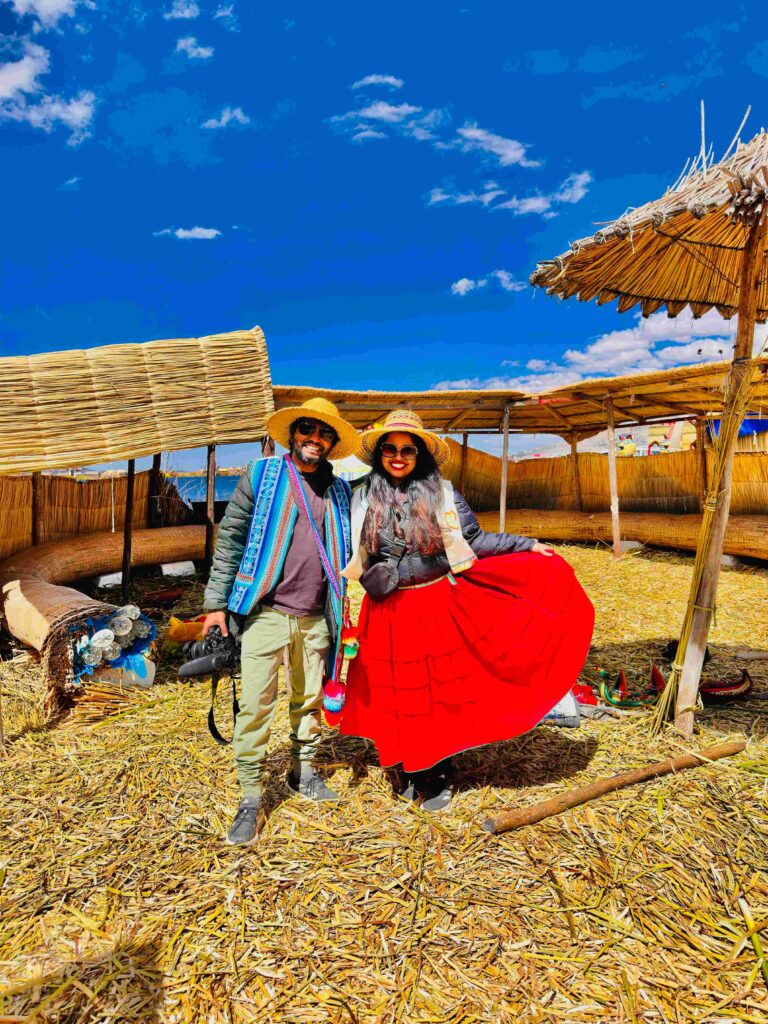
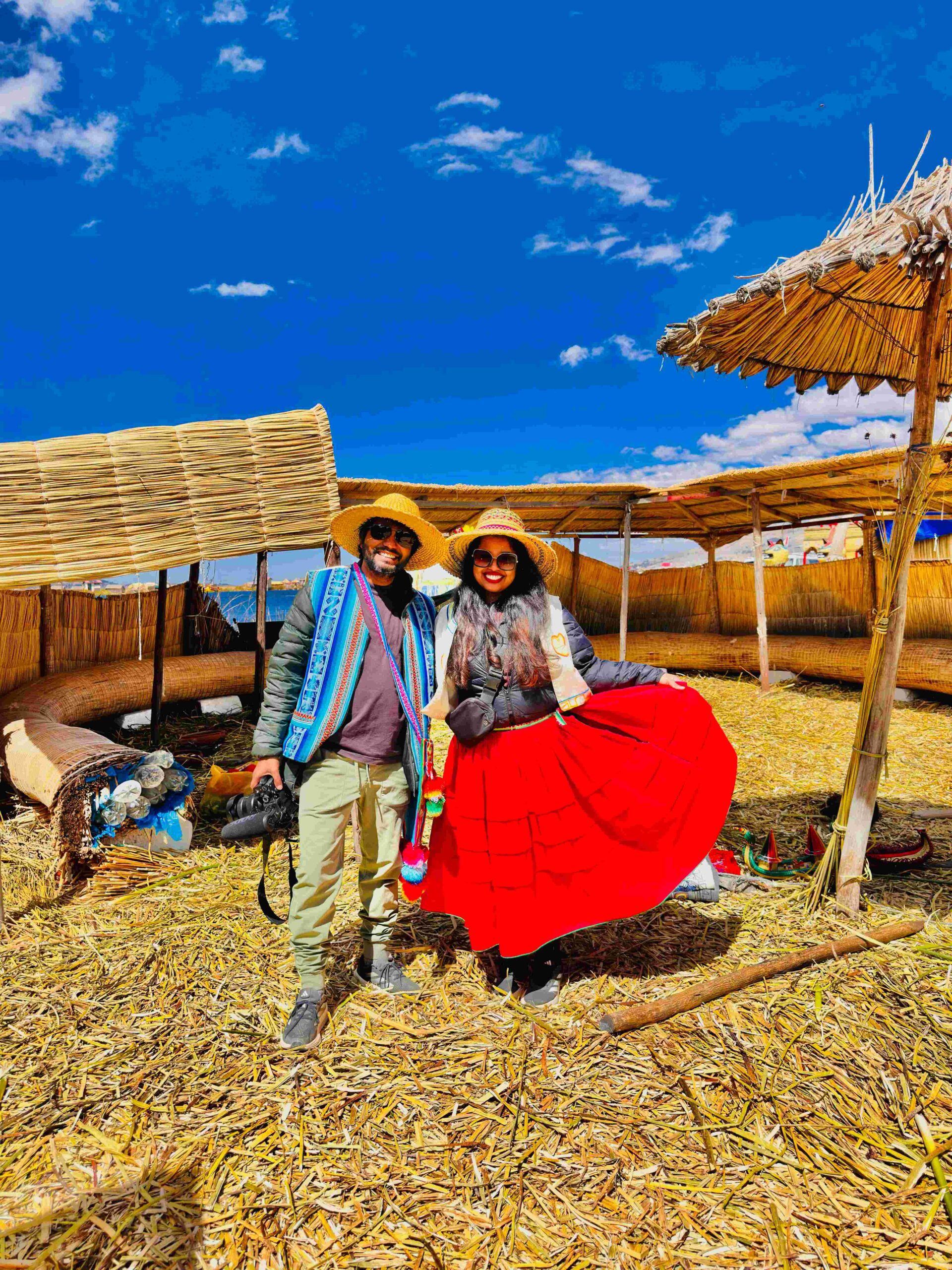
Day three brought one of the most memorable experiences of our travels. Instead of joining a day tour, we stayed overnight with an indigenous Uros family living on the famous floating islands of Lake Titicaca.
These islands are constructed entirely from reeds. Layer upon layer of vegetation is compressed together to create floating platforms that support homes, schools, community centers, and even medical facilities.
🏡 Life on a Floating Island
Walking across the islands felt surreal. Every step produced a soft bouncing sensation, constantly reminding us that we were standing above deep water.
The Uros community has lived on these floating islands for centuries. Today tourism plays a major role in supporting local families, although fishing and traditional crafts remain important parts of daily life.
During our visit we learned how the islands are maintained, how reeds are harvested, and how entire sections can be rebuilt or moved when necessary.
🎭 Uros Culture & Traditions
Our hosts shared fascinating stories about their culture, beliefs, and history. Traditional symbolism centers around three important animals: the condor, the puma, and the snake, representing the sky, land, and water respectively.
We also learned about historical food traditions, medicinal practices, and how modern education is changing life for younger generations. Many young people now move to Puno after completing their studies, creating uncertainty about the future of traditional island life.
🛏 Our Floating House Stay
We spent the night in a beautifully decorated floating house overlooking Lake Titicaca. Despite floating on water, the accommodation offered comfortable beds, a private bathroom, electricity, and incredible lake views.
Watching sunset and sunrise from the deck was magical. The silence, interrupted only by passing boats and birds, created an atmosphere unlike anywhere else we have stayed.
🐟 Fresh Lake Titicaca Cuisine
Meals were prepared by our hosts using locally sourced ingredients. Fresh trout from the lake featured prominently on the menu and turned out to be some of the best fish we ate during our South America trip.
💰 Cost of the Uros Homestay
Our floating house accommodation cost approximately USD 40 per night. Additional transportation, meals, and local fees increased the total cost, but the experience felt absolutely worth it considering the cultural immersion and unique setting.
🚌 Puno to Cusco with Peru Hop
After returning to Puno, we rejoined Peru Hop for the journey to Cusco. The bus offered Wi-Fi, charging ports, onboard facilities, and a comfortable ride through the Peruvian highlands.
The route includes scenic landscapes and optional stops, making it much more enjoyable than a standard long-distance bus journey.
✨ Travel Tips for Lake Titicaca
- Spend at least one night in Copacabana.
- Carry cash in both Bolivia and Peru.
- Altitude sickness can affect anyone—drink water and acclimatize properly.
- Pack layers as temperatures drop significantly at night.
- Consider a homestay on the Uros Islands for a more authentic experience.
- Use a Wise card for ATM withdrawals and currency exchange.
- Book Isla del Sol tours in advance during peak season.
- Travel light if visiting Isla del Sol.
🎥 Watch Our Lake Titicaca Adventure
Lake Titicaca exceeded every expectation we had. From the peaceful shores of Copacabana and the ancient legends of Isla del Sol to the remarkable floating communities of the Uros people, this journey revealed a side of Bolivia and Peru that many travelers never fully experience. If you're planning a South America itinerary, don't rush through Lake Titicaca. Spend a few days exploring both sides of the lake and you'll discover one of the continent's most rewarding travel experiences.